Unknown's avatar

About Kathleen Brady

Kathleen Brady has written biographies of Ida Tarbell and Lucille Ball. She is a former reporter for Time Magazine and has contributed opinion pieces on New York City issues to Newsday and other local media

Diversity Is MIA at Halftime


Since this year’s Oscars nominations inspired a worthwhile discussion of diversity, I’ve been waiting for the entertainment media to say more about inclusion – or the lack of same – at the Sunday Super Bowl halftime show. None of the vanilla-talking CBS announcers mentioned the appearance of The Youth Orchestra of Los Angeles. Nor did I hear those boys mention Gustavo Dudamel, the charismatic music director of the Los Angeles Philharmonic. If they did, it wasn’t enough, even though they fell over themselves promoting Beyoncé and Bruno Mars. (Chris Martin, not so much).

On Monday the twitterverse and post-show analysts gave Chris Martin flack for being less vivid than Beyoncé and Bruno Mars. He received scant credit for generously inviting them to join him on the show in the first place. Nor was Coldplay’s front man hailed for inviting The Youth Orchestra of Los Angeles to back him up. Perhaps he would have gotten his props if he had featured dozens of women cavorting in thongs. That worked for others.

I was in on the Dudamel-YOLA secret because I am a regular listener of the classical music station WQXR. It became my go-to background station when I realized it would keep me in my chair. Stravinsky’s rousing Firebird, unlike Katy Perry’s Firework, is impossible to sing or dance to (except for those on pointe).

WQXR hosts in the week leading up to Feb. 7 mentioned that Dudamel would be appearing with YOLA, the group of disadvantaged young musicians he founded. This led me to believe that I would see something generous as well as fun at the Super Bowl halftime. I thought the uninitiated would discover the joys of classical music. Not at all, as it turned out. However, one did see some diverse if uncredited faces behind Martin as he ran around bringing the camera to as many of them as possible. Asians! Latinos! Possibly a blonde! Parts of a few kids were glimpsed in the tight shots of Martin, Beyoncé and Mars, but mostly it was their clothing.

Those kids were happy. I’m hopping mad. So here’s my new song of choice: Coldplay’s Life in Technicolor. Since it includes singing, working hours I will go with Vitamin String Quartet’s version.

Please comment below, especially if, unlike me, you heard mention of Dudamel or YOLA. This is a blog of facts

Let There be Light Rail

Proposed Connector Route

Courtesy of Friends of the Brooklyn Queens Connector via New York Daily News.

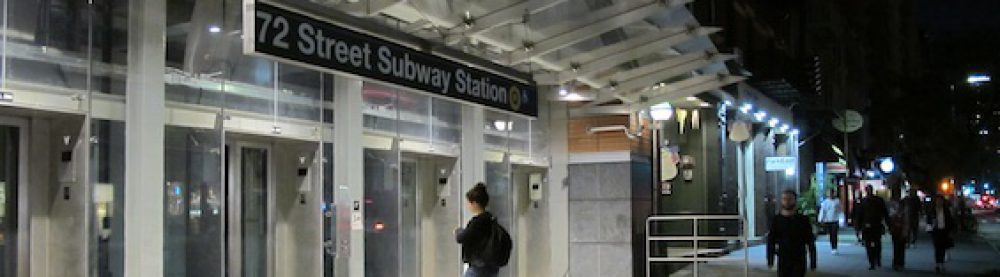
Kudos to Mayor Bill de Blasio for proposing the Brooklyn Queens Connector, a light rail that will improve transportation along 16 miles of the East River waterfront. It’s a New York City-only undertaking (without the complications of state, federal or Metropolitan Transportation Authority involvement). Tax revenues from increased property values are expected to cover its $2.5 billion cost. Contrast that with the $4.5 billion, two-mile Phase 1 of the Second Avenue Subway, which will go from 96th Street to 63rd Street and Lexington Avenue. This required boring through rock, mining out tunnels and designing and building station stations with elevators and escalators. Brooklyn Queens Connector rails will be embedded in existing streets. Groundbreaking is tentatively scheduled for 2019-2020. If the Second Avenue Subway (a plan conceived in the 1920s) is extended north and south, one hopes future phases will be light rail and not the costly, wasteful, destructive construction that we have seen on the East Side for years. When the Second Avenue subway opens in December, 2016 (if it does) the public will see how little it gets for its money – two rails, not four as in the Lexington Avenue line, and new stops only at 96th, 86th and 72nd Streets – none in the 14 blocks between 86th and 72nd Streets. Certainly, there are concerns about de Blasio’s proposal and hopefully the review process will improve it further. The light rail was plan is based on a report commissioned by a group called Friends of the Brooklyn Queens Connector, who can serve as a model for what non-profits could achieve.

Does NYC Support Democracy?

Manhattanites who vote are still scratching their heads over this last ridiculous “election” in which six Democrats ran unopposed for six judicial positions. As a poll worker, from 6 a.m. to 9:42 p.m. on Nov. 3 I wallowed in the spectacle of seeing voters come to terms with the fact that they were participating in a sham. They had no say in whether or not nominees would take office. In effect, in full view, the fix was in. This raises the oft-asked question of whether or not we should “elect” judges. Of course we seldom know anything about them in the first place, but pity the citizen who tries to learn about a potential judge. Most did not feel the need to submit their bios to a voter guide.

Do you see a choice?

Where’s the Choice?

Tuesday, when distressed citizens asked me if they had any choice at all, I pointed out their options: 1) Vote as directed. 2. Write in their own candidates. 3. Scan the ballot without marking it.

Three of some 100 voters in my district told me to void their ballots because they saw no point to any of it. There were other reactions to the situation as well. Two sets of parents audibly exhaled and proceeded to “privacy booths” to mark their ballots with their kids. (One is led to wonder about the value of secret ballots when the only choice a voter has is whether or not to participate.) Several who identified themselves as Republicans studied the sample ballot taped to the wall, mumbled about Donald Trump, and stole out into the night. I rejoice that New Yorkers generally support the principles of the Democratic party, but I am concerned that extremists and Know Nothings are hounding moderates from the  party of Eisenhower. Couldn’t Manhattan Republicans manage to nominate even one judge?

In some parts of the city, notably Republican Staten Island where a Democrat became District Attorney, real elections did take place. Thus some of the estimated $13 million dollars the Board of Elections pays citywide to hold an election was well-spent. As for myself,  I am left with pressing questions. Why did I not think to write in Joseph F. Crater and William M. Tweed? Who are the fools – the ones who turn out to cast a ballot or the ones who stay home? Finally, what can we do now that a great big democracy serves so few? Please comment in the box below.

Read This Book!!

Since the days of former president Paul LeClerc, the trustees of the New York Public Library have done everything in their robber baron powers to sell off or compromise the value of the institution as a research library open to those who would use it for serious purposes. At one point the current NYPL president Anthony Marx said that their aim was to make the institution more democratic, but unlike other high caliber research libraries, it was already a temple of democracy open to anyone from anywhere who wished to read, to research, to learn, to create. Two examples are a housewife and writer who used its collections to turn out The Feminine Mystique, and a journalist who produced The Power Broker, an exposé of development run amok. Maybe those are the kinds of users and truth-bearers the trustees decided to squash or hamper in favor of encouraging noisy tourists who disrupt those using the library’s materials.

Trustees also used the library’s finances as a rationale, but they undercut their own argument when they hatched, in off-the-record sessions, a plan to pay British starchitect Sir Norman Foster $9 million for a design scheme that would have gutted the structure of the building, including the steel stacks holding books. Sir Norman’s plan did result in its research collection being off-loaded to a storage facility in New Jersey. Fortunately that plan failed, although the off-loaded materials have yet to be returned and bare stacks abound in public rooms. It is surely not an accident that the most influential trustees of the NYPL are real estate tycoons and financiers. They drove the sale and destruction of the much-used East 50s branch, the Donnell Library, at a fire sale price of $59 million. After the branch was demolished, a penthouse in the tower being constructed on the site sold for $60 million. How clueless can these trustees really be and who are they serving?

In much-more measured prose than demonstrated in the above paragraphs, Scott Sherman uncovered this story for The Nation. His spare and elegant book Patience and Fortitude Power Real Estate and the Fight to Save A Public Library would be the rewarding experience of an evening’s reading if one could concentrate on the fact that the Foster/Central Library Plan was quashed when Mayor Bill de Blasio declined to fund it. However, the trustees involved are still active. Equally important, the book is revelatory of the capture of the boards of nearly every civic organization in the city by financial and real estate profiteers who know only cronyism and financial gain and are capable of nothing else. Happily, Sherman portrays many interesting and constructive New Yorkers in Patience and Fortitude. These labor tirelessly in the light for public good and not in closed session. One pivotal player in the defeat of the Central Library plan was a young member of the state assembly named Micah Kellner who chaired the Assembly’s library committee and was also running for New York City Council. In late June, 2013 he held an 8-hour public hearing that inspired a closer look at the plan. It galvanized and unified its opponents and led to lawsuits by distinguished scholars. A month after the hearing, Kellner’s career was effectively destroyed. The N.Y. Times reported that four years earlier a junior staff member had charged Kellner with verbal sexual harassment. Assembly Leader Sheldon Silver (his own troubles surfacing) claimed that he had only just learned of the 2009 episode and a similar alleged incident that had occurred in 2011. Kellner, who is openly bi-sexual as well as a husband and father, lost his bid for the City Council. Sexual harassment, especially if it is actually proven, is indefensible, but the timing of the career-killing charges is interesting. Power is not power unless it is exercised. But perhaps there are Higher Powers. A few weeks after the Central Library Plan was abandoned in May 2014, a section of the Rose Reading Room ceiling collapsed. Normal wear to the steel trusses that supported it was blamed. Repairs continue and the huge expanse is still shuttered. But what greater, un-doable damage might have been done if the trustees had been allowed to rip out the steel trusses altogether? How many oligarch-ready condos might have been built like the ones that are going up where the popular, democratic Donnell Library once stood? It’s too late for patience. Now urgency and fortitude are called for, along with Distrust of trustees. What do you think? Please comment in the box below.

Learning to Step On Tolerant Toes

At last New Yorkers have reason to be happy that the Metropolitan Transit Authority’s courtesy campaign has been a total failure. It’s a sign that riders don’t pay attention to notices on subways and busses! This makes me feel better about the U.S. District Court judge who would allow the pro-Israel American Freedom Defense Initiative to run an ad featuring a menacing Arab and the words “Killing Jews is Worship that draws us close to Allah.” [See AFDI photo featuring a non-menacing American] The ad attributes this to Hamas TV and adds this line below the quote: “That’s his Jihad. What’s yours?”

The AFDI wanted to run this message in the NYC transit system last year, but the MTA rejected it saying it could be a call to violence again Jews. The AFDI sued and won Tuesday in the U.S. District Court. Today the MTA tried to blunt the ruling by sending a letter to the judge saying that at its April 29 meeting the MTA board will establish a new policy to ban ads of a political nature. The MTA also has 30 days to appeal the decision through the courts.

Judge John G. Koeltl of the U.S. District Court sided with the AFDI based in part on the lack of evidence that similar ads in Chicago and San Francisco had ill effect. He also noted, “The defendants underestimate the tolerant quality of New Yorkers and overestimate the political impact of these fleeting advertisements.”

Who Say's it's A Sharing Economy?

Pole Hog Under “Don’t Be A Pole Hog” message

Well, okay. We could also call New Yorkers “tolerant” rather than “dangerously self-absorbed” when they ignore the following notices that are part of the MTA courtesy campaign: “Step Aside to Let Others Off First.” “Don’t Be a Poll Hog.” “Keep the Doors Clear So Others Can Board.” Riders of all races, colors, creeds and nationalities feel free to block subway doors and restrict entry to other riders whether a car is empty or has relative extra room at rush hour. We could be helping each other, but we don’t.

This behavior comes at a time when ridership is the greatest it has been in 65 years and crowding is a serious problem. I would like to believe that it is tourists who are behaving in such piggish ways, but they seem to find bad behavior part of the show. In any event, if the AFDI does get to run its ad, tourists will have more to see. Not so New Yorkers who will be too tolerant to take much notice, according to the judge. Would they clear the doorway if a police officer asked them to? Would it be helpful to find out? Please scroll down to the “Leave a reply” box and comment.
Update: On Monday April 27 the MTA board voted 7 to 2 in favor of banning political and other controversial ads. A WSJ story notes that government agencies that restrict ad to commercial content generally prevail when challenged in the court. Hooray (for once) for the MTA!

A Small Midtown Business Survives!

Just in time for the Lenten season comes the miracle of a resurrection — Jim’s Shoe Repair is saved! Having now signed a new lease for the space at 50 E. 59th Street that it has occupied since 1932, Jim’s is a rare example of a successful and hallowed New York City business beating back the encroachment of a faceless mega-corporation. Some eighteen months ago the adjacent Duane Reade store, owned by Walgreen, tried to take over the space of the family-owned business, reportedly because to wanted to install refrigerators. Landlord SL Green Realty was ready to kick Jim’s out and it looked like another small New York City business would be swallowed in the maw of a national chain. (See May 2, 2014 post for background) 

Although SL Green drove Posman Books in Grand Central Station out of business, the firm and its tenant Walgreen decided to relent in the case of this repair shop. Joseph Rocco, grandson of the founder, credits his lawyer Bill Brewer who worked pro bono. “Without Bill Brewer we would be out of here,” he said. “He brought his shoes in here one day and said, ‘What do you mean you are losing your lease? You are not losing your lease.'” Rocco also acknowledges the help of Fox 5, the N.Y. Daily News, bloggers who reported on their plight, and customers who signed their petition. Surely it also helped that customer Kim Cattrall was bringing in a black handbag for repair when the Daily News came to do its story.

The Roccos were determined to save their business and looked for another location. They did manage to find one last fall, and they thought they had a deal. However, that fell through when their prospective landlord dropped them for another tenant who offered more money. Disaster loomed until just before Thanksgiving when Brewer phoned Rocco, inquired if he was sitting down, and said that SL Green had agreed to renew. By Valentine’s Day the papers were ready. Could it be that mega-businesses like Walgreen, and even Real Estate Board of New York members like SL Green, care about their image? Maybe this time.

The survival of Jim’s is a rare victory for those who love New York City and who fight to help its people to thrive. However, more than blogs and Kim Cattrall are needed if even one more small business is to be saved. Today a stroll up Madison Avenue from Jim’s to East 72nd Street offers a visit of at least one empty store front on every block.

Last July, Danny Meyer wrote in the N.Y. Times about the threatened closure of his Union Square Cafe and called for New York City to create a body like London’s Rent Assessment Panel that has helped to preserve neighborhoods. Recently Mayor Bill de Blasio summoned the perfect metaphor when he said that New York City should not be a “gated community.” Nor should it resemble a strip mall in Stamford, but it does. Within a two block radius of my apartment building on the Upper East Side there are two Duane Reades and two Walgreens, plus a CVS. We have more bank branches than delis, which is no accident because the banks took over the spaces of the family-owned food shops that all used to thrive in the days of commercial rent control. If the city can’t bring back fruitful regulation then it must explore the creation of an arbitration panel for commercial rent rates or a similar mechanism that will promote New York’s economic diversity. If the city’s business elites can’t bother to figure out how they can profit from the economic well-being of residents, let them at least think of the tourists. Those Stanford strip malls aren’t much of a draw to all those people that are flying in from Beijing and Rio. Please scroll down to the “Leave a reply” box and comment.

Subway Art Made and Found

Riders of New York City subway are likely to have their eyes glued to mobile devices these days, but those who look around, especially when they transfer, often see mosaics, sculpture and stained glass by established and emerging artists. This is well documented in a new book New York’s Underground Art Museum that features one hundred images displayed throughout the boroughs.

The Times Square station presents two distinguished murals — a glass mosaic by Jacob Lawrence and one nearby in porcelain enamel by Roy Lichtenstein.

Lichtenstein Mural, Times Square subway station

Photo by Rob Wilson for the MTA

But beauty with a nod to abstract expressionism, occurs as commercial images wear away. Please scroll down to the “Leave a reply” box and comment.

Photos by Kathleen Brady

Photos by Kathleen Brady

DSCN2435
DSCN1708

Who are Patrick Lynch’s Real New Yorkers?

As president of the Patrolmen’s Benevolent Association, Patrick J. Lynch may be obligated to stand up for every union member who commits a questionable act, even an indefensible one. However, his actions and tone are those of thug, of someone more like a semi-literate television Mafia capo rather than a responsible police officer. Lynch has created, or highlighted, a fissure that exists between an insubordinate, armed police force and the people of New York City, a large number of whom took to the streets in December to protest police treatment of minorities. Why has the media styled growing questions about a pattern of police conduct as an issue between Lynch’s rank and file and the mayor? Possibly because Lynch has spun it that way. Mayor Bill de Blasio owes “New York’s Finest” no apology for voicing concern about dubious actions by some officers – one of whom used a banned chokehold that killed Eric Garner and another who opened the door to a public housing stairwell with the use of a loaded and drawn gun, thereby killing Akai Gurley. The mayor owes no apology for drawing a distinction between officers who serve the public trust and those whose actions invite scrutiny. In every his pronouncement de Blasio has indicated that he does “have the back” of a responsible police force, despite the disrespect of those who literally have turned their backs on him at recent public events, including funerals of assassinated officers. Nonetheless, some contrition is due: Lynch owes an apology to New Yorkers for a work slowdown that has cost the city as much as $10 million per week, according to the Citizen’s Budget Commission, which bases the figure on a drop in the issuance of parking tickets. The N.Y. Daily News reports that Lynch has told his members to go back to doing half of their former workload.  Meanwhile, with all this going on, Lynch through the PBA website and in newspaper ads thanks “real New Yorkers” for not believing that their insubordination has anything to do with labor negotiations and for “holding accountable” those who stir up hatred and violence against police officers.  The question is what kind of people does Lynch regard as “real New Yorkers” because sadly, almost half of his members, notably the white ones, don’t qualify. Some 40 percent are suburban and exurbanites, according to data from the U.S. Equal Employment Opportunity Commission and the Census Bureau. That is a smaller percentage than those other large U.S. cities, but the numbers provoke even more thought when they are examined along racial lines. While 77 percent of black officers live in the five boroughs and 76 percent of Hispanic ones do, only 45 percent of white officers are “real New Yorkers,” if being a “real New Yorker” means residing here and paying city taxes. Minority police officers are more likely than their white colleagues to be willing to live among the people they serve and, apparently, be comfortable with us and raise their families alongside ours. When it comes to living here, can we say that New York City police officers are turning their backs? If minority cops can find a way to afford living here, why can’t – or won’t — white ones? Could moving out of the boroughs be the most questionable act of all? Please scroll down to the “Leave a reply” box and comment.

Looking for Hope, Even If It Kills Us

Four encouraging things have come out of the unrest resulting from a Staten Island grand jury’s failure to indict the policeman who killed Eric Garner. Garner, who was apparently selling illegal loose cigarettes, was subdued with a banned chokehold after he was surrounded by three policemen, each of whom was almost as big as he was. The grand jury’s decision deprived prosecutors of the opportunity to present facts in court, including those that might have explained the policeman’s action. Nonetheless, here are the emerging good things, one for each week in this season of Advent:

  1. For those who doubt that black and white men are not treated equally under the law, Jim Dwyer, columnist for the N.Y. Times, provided clear if appalling evidence when he detailed the wildly different ways that police dealt with two graduate students at the Union Theological Seminary after they were arrested for blocking traffic.

  2. White people in meaningful numbers are marching with the black community to demand respect for black lives, including those individuals who are suspected of criminal behavior. On the night protests began, I encountered a rolling protest on West 47th Street. Seeing that nearly all the protesters in front of me were white, I burst into tears. It took a few days for me to understand why since the full range of ethnicities I knew was appalled about the lack of indictments in Ferguson, Missouri and certainly about what seems to be a clearer case in Staten Island. Turns out, I was touched by the sight of a huge diverse group of people finally making demands to show that we are one society and that injustice to one group (be it physical or economic) is an attack on everyone.

  3. While some three hundred demonstrators have been arrested, the NYC police have been more focused on maintaining order than in threatening and punishing protestors. At a breakfast of business leaders a few weeks ago, Police Chief Bill Bratton acknowledged that the approach was “hands off” in part to save police time and to avoid paying compensation for over-reacting, as occurred during the Bloomberg Administration. He explained that the city is paying out some $18 million in claims from the 2004 Republican National Convention and the Occupy Wall Street three years ago. In addition, police time is spent in giving depositions about the mass arrests that occurred.

  4. Citizens who might have needed a reminder have been forced to recognize what the police have to deal with every day thanks to self-righteous protestors who attacked officers on the Brooklyn Bridge. The attackers who broke the law had the good luck not to kill anyone, making them more fortunate than Officer Daniel Pantaleo, who surely did not mean to kill the asthmatic Garner with a chokehold. As it is, both he and Garner have entered the history of the civil rights movement, on different sides certainly. Is it too much to hope that their horrific encounter will be a turning point in New York City and throughout the country? Please scroll down to the “Leave a reply” box and comment.

Is the Board of Elections a Job Program?

The New York City Board of Elections has some 700 days to prepare for the 2016 presidential balloting. Based on my experience in these past two election cycles, I expect the BOE to gum it up again, unless some basic changes are made.
This year I was a poll worker at the side of a very dear man who was incapable of doing his job. Let’s call him Fred. A veteran with ten years service in the Army, he participated in the Reagan invasion of Granada and was discharged after suffering seizures. Fred radiated sweetness and a near-total incompetence that was recognized by all.
Five minutes after the polls opened our supervisor called for replacements for four workers who had been identified as problematic and was told that replacements were in a cab on their way to us. However, by 11 p.m. when we went home after an 18 hour day (minus two hours worth of breaks), no reinforcements had arrived.
In the meantime we managed. Fred’s unending good will melted my stony heart and together we figured out how he could tear the paper ballots from the pad without ripping them. We decided that would be his job while I signed in voters and answered questions about the ballot and the scanner, which some 80 percent distrust.
At least Fred remained calm throughout. Last year during the mayoral primary I worked in Greenwich Village. Early in the morning a worker at the next table spied Sarah Jessica Parker. My colleague started shrieking her name and ran up to talk to her in what became a brief commotion with flashing cell phone cameras. Whether SJP now casts an absentee ballot or comes to polling places in disguise I cannot say for I transferred to my own election district uptown where I found Fred.
He told me that he had worked at this very polling place two years ago. I recall the place in 2012 as a scene of complete ineptitude, exponentially aggravated by a high turnout for the presidential election. Voters stood on line up and down the street for more than an hour, and once inside were directed to the wrong tables, misinformed about how to fill out paper ballots, and subjected to broken scanners. I think I remember Fred himself misinforming me while impervious to my snarls. The chaos created by the workers themselves inspired me to enlist as a poll worker to try to understand why the BOE operates as it does. (enter  Poll Worker in the search box above to read about last year’s experience).
To a certain extent, I then became part of the problem because of my lack of experience and sketchy knowledge, which are compounded by the fact that procedures change a bit each year. Many workers and nearly all supervisors know balloting procedures cold and do their best, but they can’t be with each of us simultaneously to correct mistakes during the day or when we close the polls at night’s end. They manage to do a credible job only when turnout is low. I passed tests this August, but had forgotten some key elements by November. Those who not pass are encouraged to take the training over and over until they do. Some ultimately accomplish this with the help of instructors, which may explain how my new friend Fred managed to qualify.
Here’s an idea: maybe those who cannot pass the open book test at the end of training should not be allowed to try again. The failure of this simple test, which does have a few questions that seem tricky, indicates that the job is not for them.

Last summer a Rob Lowe look-alike helped supervise my training. He told me that he takes a leave of absence from his job each year because he feels that Republicans like himself should get more involved and not leave it to registered Democrats. Thinking we were simpatico I asked, unwisely, if he thought that Republicans did not volunteer because they did not believe in government. He said they did not volunteer because Republicans tended to have jobs. Well, maybe there is something to that. Poll workers in New York earn about $10 an hour for a day that goes from 5 am to some time after 9 pm when the polls close. That money will be a godsend to many, including Fred.
Capable citizens are as much to blame for the alarming performance of the Board of Education as anyone. Friends and neighbors who saw me at work gave me patronizing smiles. Many people who say they care about voting have the free time and stamina to do this work and should sign up to do so, at least once.

On election night, a poll monitor thanked me for working with Fred. He said they knew he should not work again. I asked if the Board of Elections was about voting or make-work. The monitor mumbled, backing away, that it was a little of both. If so, the Board of Elections might seek new poll workers at unemployment offices, veterans groups, houses of worship, Facebook and Twitter where able-bodied, able-minded long-term unemployed people can be found. Those recruits might not be as pleasant or deserving as Fred, who made for better company than many world-beaters I know, but they might be able to do the job.

Should the BOE be a job program? What has been your voting experience? Please scroll down to the “Leave a reply” box